
The Complete Pamir Highway FAQ: 15 Essential Questions
The practical questions about the Pamir Highway are harder to find straight answers for. Permits, real costs, transport between Dushanbe and Osh, what Badakhshan actually demands from you. Fifteen questions, straight answers.
Cory - founder of Borderless Expeditions


Table of Contents
1. Do I need a permit to visit the Pamir?
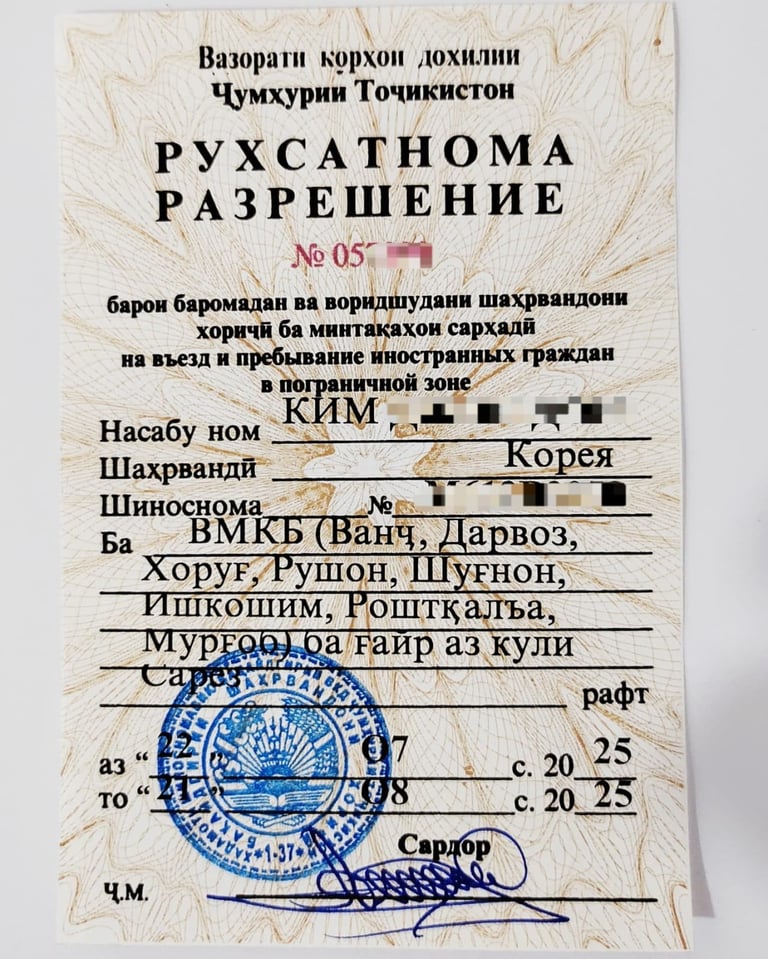
Short answer: Yes. The GBAO permit is mandatory for the entire Tajik Pamir, and depending on your nationality, you will also need a Tajikistan visa.
The key document is the GBAO (Gorno-Badakhshan Autonomous Oblast) permit. You cannot enter the high-altitude Pamir region without it, and checkpoints take this seriously, particularly from Khalai Khumb onwards. Here are your three options for getting it sorted.
Option A: Through a tour operator or agency
Most Pamir Highway tour operators will arrange the GBAO permit as part of your expedition booking. If you are going with a guided service, this is usually handled for you without extra hassle. You can also get it directly through us at borderlessexpeditions.com/permit-gbao, where we take care of the paperwork and delivery on your behalf.
Option B: In person at an OVIR center
If you are traveling the Pamir Highway independently, you can walk into an OVIR (Office of Visa and Registration) center in Dushanbe, Khujand, or Penjakent. These are government offices handling permits and registration. Processing ranges from 30 minutes to two days, and the cost is noticeably lower than other routes. You will need your passport and your planned travel dates. The catch is that you need to be in one of those cities first and have time to wait.
Option C: While applying for your e-visa
Unless you are a citizen of a country with visa-free access to Tajikistan, most travelers apply for an e-visa online at evisa.tj at least 15 days before arrival, though applying well in advance is the smarter move. The Tajikistan e-visa runs around 50 USD, and you can add the GBAO permit on top for an extra 20 USD during the same application.
One more thing on registration
If your stay in Tajikistan goes beyond 10 days and you are not on a visa, you are required to register with an OVIR office. Travelers with a valid Tajikistan visa are exempt. For registration you will need your passport, an invitation letter (most hotels and tour operators can issue one), and payment of the government fee.
Restricted area permits
If your Pamir expedition includes Lake Sarez or Zorkul, you will need a separate permit for each. Both are restricted areas. These permits are also issued at OVIR offices.
2. What's the best time to visit the Pamir ?
Short answer: Beginning of June to end of September.
The Pamir season runs from late April through September, but when you go within that window changes the experience considerably. Road conditions, pass access, and crowd levels all shift month to month.
May to early June: the highway is waking up
The Pamir Highway starts reopening after winter, but things are still unpredictable this early. High passes can hold snow well into May, and the Bartang-Karakul detour is often still closed. If your schedule is flexible, give early May a miss unless delayed routes do not bother you. By late May and into early June, conditions on the Pamir Highway improve noticeably and most sections become reliable again.
June through August: the main window
This is the sweet spot. Weather is stable, the majority of Pamir roads are fully passable, and the high-altitude landscape is at its most dramatic. July draws the most travelers. June is slightly quieter but just as good for a Pamir Highway expedition. If you want the full experience without the peak crowds, aim for the first half of June or the tail end of August.
September: the overlooked option
September does not get the credit it deserves. Weather holds up well into the month, mornings get sharp but days stay clear, and the drop in foot traffic makes the whole Pamir feel more remote. Roads stay open through at least mid-September, sometimes into early October if snowfall holds off. For anyone after a more solitary Pamir Highway experience, this is the month worth considering.
When to avoid
Late October through April, full stop. Heavy snow closes the high passes and sections of the M41 become impassable. There is no workaround.
A note on road conditions
If you are traveling in May or September, check recent reports before you go. The M41 stretch between Bartang and Karakul is particularly prone to closures during the spring thaw. Most other sections of the Pamir Highway are passable by late May, but real-time information from people on the ground is always worth tracking down before you commit to a route.
3. How do I get there? Pamir Highway transportation options
Short answer: Join a guided expedition (easiest), rent your own vehicle (most flexible), or share rides (cheapest).
There is no single right way to travel the Pamir Highway. Your budget, your driving confidence, and how much uncertainty you can stomach will point you toward one of these five options.
Option A: Join a guided Pamir Highway expedition
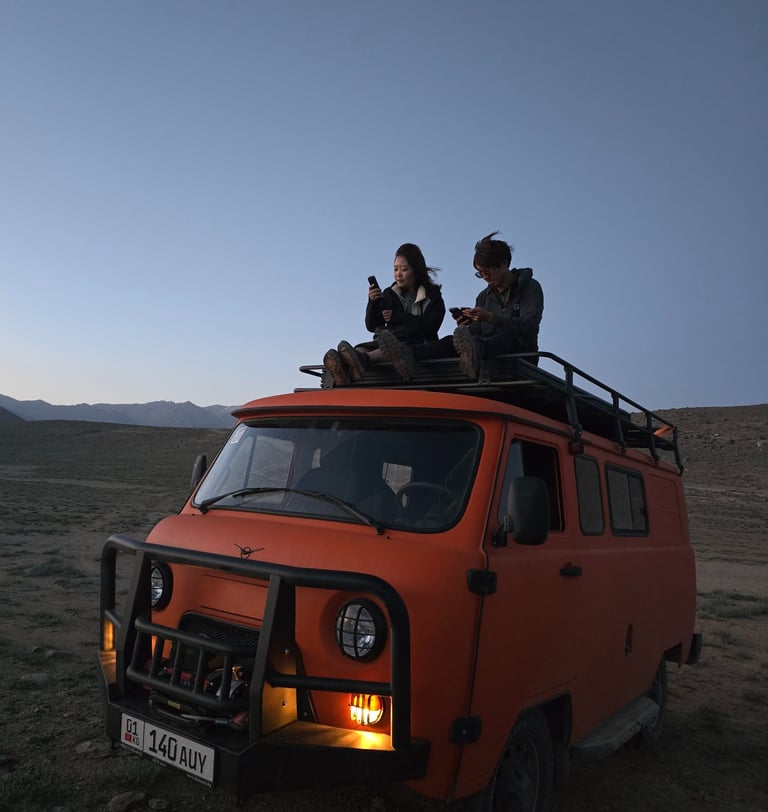
This is the most popular starting point for first-timers. You travel in a shared vehicle, usually a UAZ or 4x4, with a professional driver and guide. Groups typically run between 3 and 6 people. Costs get split, logistics are handled for you, and you have someone on the ground who knows what they are doing when a road disappears past Murghab. Some operators run fixed departure dates, others are more flexible. Pay close attention to what is and is not included before booking, because that gap varies a lot between companies.
Option B: Rent your own vehicle
If you hold an International Driving Permit and have real experience on rough terrain, you can rent a 4x4 in Dushanbe, Osh, or Bishkek. A basic older Toyota starts around 150 USD per day, with a 300 to 400 USD pickup fee on top. A more capable vehicle costs more. You will need to sort your own insurance and have at least a working knowledge of basic vehicle maintenance before you go. Before you leave, check everything: engine, brakes, tires, spare tire. The Pamir Highway is not the road to discover a problem you missed in the parking lot.
Option C: Shared rides and hitchhiking
Solo travelers and budget-minded adventurers regularly find shared rides through Facebook groups or WhatsApp communities built around Pamir Highway travel. Costs split between passengers make this the cheapest option on the list. The trade-off is loose timing and unpredictable comfort. If you run on a fixed schedule, this is not your option.
Option D: Fly to Khorog, then connect overland
Tajikistan's national airline runs flights from Dushanbe to Khorog a few times per week. Tickets run between 60 and 100 USD, the flight takes around 1.5 hours, and it cuts 12 to 14 hours off the drive from Dushanbe. From Khorog, you can link up with local guides, hire a driver, or continue independently. If your time on the Pamir is limited, this is a legitimate way to get straight into the high-altitude section without burning days on the lower road. The PECTA office in Khorog (Pamir Eco-Cultural Tourism Association) is a good first stop for on-the-ground information.
Option E: Motorbike expedition
For experienced riders, this is hard to beat. Royal Enfield Himalayans and smaller bikes are available for rent in Bishkek, Osh, and Dushanbe. You set your own pace, you feel the altitude differently, and there is a particular kind of solitude that only comes on two wheels at 4,000 meters. It is also physically punishing and riskier when road conditions deteriorate. Go in knowing that, not finding it out halfway through.
4. What about border crossings on the Pamir Highway?
Short answer: Kyzyl-Art Pass is the main crossing between Tajikistan and Kyrgyzstan. No additional permit is required for it.
If you are doing a full Pamir Highway expedition end to end, at some point you are crossing a border. Here is what each option actually looks like.
Main crossing: Kyzyl-Art Pass
This is the most used and most spectacular crossing between Tajikistan and Kyrgyzstan. Sitting at 4,282 meters, it delivers the kind of panoramic mountain views that make the altitude worth it. Between the two border posts sits a rough 20-kilometer no-man's-land stretch that can get genuinely brutal depending on recent weather and what you are driving. No permit is required beyond your standard GBAO documentation.
China crossing: Qolma Pass (Kulma Pass)
Qolma is the only official border crossing between China and Tajikistan. No additional permit is needed, and it is open year-round. Hours are worth paying attention to: the Chinese side operates 12:00 to 19:00 Beijing time, while the Tajikistan side runs 09:00 to 17:00 Dushanbe time. In practice, the border sometimes opens an hour late and closes an hour early, so build that buffer into your day.
Other crossings
Several other crossing points exist along the Pamir corridor, Karamyk-Karamyk among them, but most are restricted to Tajik and Kyrgyz citizens only. Before you plan any route that relies on a lesser-known crossing, confirm its status with someone who has crossed it recently. Kyzyl-Art remains the only consistently reliable option for international travelers on the Pamir Highway.
Skipping Kyrgyzstan entirely
If you fly into Khorog or Dushanbe and keep your Pamir expedition entirely on the Tajik side, you never need to cross into Kyrgyzstan at all. The Tajikistan portion of the Pamir Highway stands completely on its own as an itinerary. If border crossings complicate your plans, this is a real and worthwhile alternative.
5. Do I need travel insurance?
Short answer: Yes. Not optional.
The Pamir is remote by any measure. Medical facilities along the highway range from minimal to nonexistent, and if something goes wrong at altitude, getting you out costs serious money. Standard travel insurance policies frequently exclude adventure activities and high-altitude regions, which means you could be fully insured on paper and completely unprotected in practice.
Make sure your policy specifically covers:
High-altitude travel
Remote location evacuation (helicopter extraction in the Pamir runs into the thousands)
Adventure activities if your expedition includes trekking, mountaineering, or anything beyond riding in a vehicle
Some insurers cover Central Asia and the Pamir specifically. SafetyWing and IATI are two worth looking at if you need a starting point.
Read the exclusions before you buy. The fine print on altitude limits and geographic coverage is where most standard policies quietly fall apart
6. What should I pack for the Pamir ?
Short answer: Warm layers, sturdy boots, sun protection, and altitude medication.
The Pamir will take you from moderate elevation to above 4,600 meters, sometimes within a single day. Weather shifts fast up there, and the gap between a warm afternoon and a bitterly cold night is smaller than most people expect the first time.
Clothing
Warm layers: base layer, fleece, and a solid insulated jacket. Nights at high altitude get cold in a way that catches people off guard.
Windproof and waterproof outer shell: mountain weather on the Pamir does not follow a schedule.
Sturdy broken-in boots: your feet will thank you, especially if any trekking is involved.
Health and personal care
High-altitude medication such as acetazolamide (Diamox) if you are prone to altitude sickness. Talk to your doctor before the expedition. Many Pamir travelers take it preventatively regardless.
Anti-diarrhea medication, sunscreen, and lip balm with SPF. The sun at high altitude hits harder than you expect.
Toilet paper and wet wipes. Do not assume these will be available.
Gear
Camera or phone with solid storage. The landscapes on the Pamir Highway are worth documenting properly.
Power bank. Charging points along the highway are scarce.
Reusable water bottle or hydration system. Water is available along the route, but fill up whenever you can.
Offline maps. Download Maps.me for Tajikistan and Kyrgyzstan before you cross the border, not after.
Optional but worth it
Swim shorts. There are natural hot springs along the Pamir Highway and you will want to use them.
Journal or notebook. Evenings in the Pamir are quiet and long. Use that.
E-reader or a good book. Most nights are tech-free.
Binoculars. Wildlife along the Pamir route is genuinely impressive if you know to look.
What to leave behind
Hard suitcases. A 30 to 40 liter backpack or a duffel works far better on these roads.
Half your wardrobe. You will rewear everything. Laundry is not a regular option on the Pamir.
Expectations of comfort. The sooner those stay home, the better your expedition goes.


7. Where do I stay on the Pamir Highway?
Short answer: Homestays and guesthouses for the most authentic experience, yurts for the high-altitude sections.
Accommodation on the Pamir Highway is nothing like booking a hotel at home. Options shift depending on where you are on the route, and the further you get from the main towns, the more basic things become. That is not a warning, it is part of the deal.
Homestays and guesthouses
This is the most common choice for a reason. Local families open their homes to travelers, you get a basic room, and meals are home-cooked and eaten with the family. The conditions are humble: simple heating, squat toilets, hot water when you are lucky. Cost runs between 15 and 30 USD per night. What you get in return is genuine and unrepeatable. No hotel replicates it.
Yurts
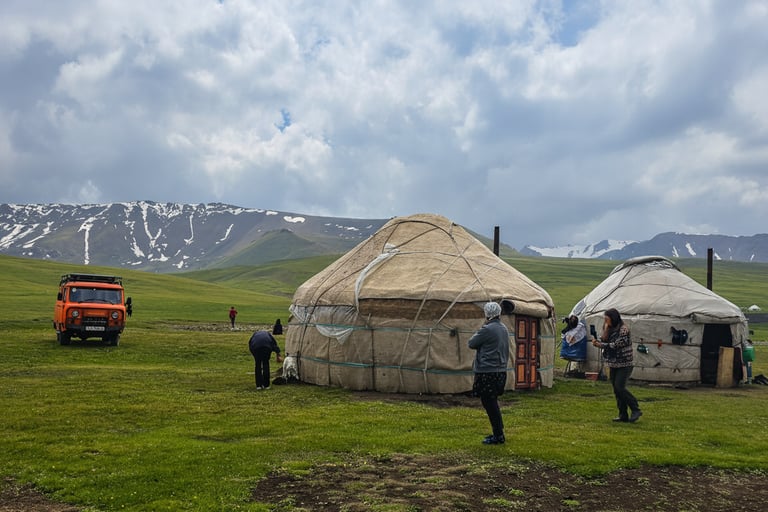
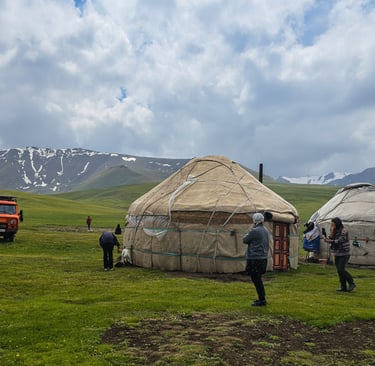
In the high-altitude plateau sections, particularly around Karakul Lake and Murghab, traditional felt yurts are available for overnight stays. A central stove handles the heating, sleeping arrangements can be communal, and the furnishings are sparse. Cost is roughly 15 to 35 USD per night. If you want to wake up at 4,000 meters with nothing but open steppe outside the door, this is how you do it.
Wild camping and tent spots
If you are carrying your own gear, wild camping is an option across much of the Pamir. Some trekking bases offer designated tent spaces with minimal facilities. Cost ranges from nothing for wild camping to around 10 USD for an organized spot.
Hotels and hostels in the main cities
Dushanbe and Osh both have proper accommodation options for your nights before and after the expedition. Budget places start around 20 USD, mid-range sits between 50 and 100 USD. Use these to recover, repack, and sleep well before you head into the mountains.
How to actually book
Most accommodation along the Pamir Highway is not on any booking platform. You sort it through your tour operator, ask your driver or guide, or find out at your previous stop who has space down the road. Booking.com lists a handful of options but coverage is thin. WhatsApp is genuinely how most homestays and guesthouses communicate and confirm. If you are on a guided expedition, your operator handles all of this for you.
8. What about internet and mobile connectivity in the Pamir?
Short answer: Assume no connectivity. You are going off-grid. Accept this before you leave.
Be honest with yourself about this one. The Pamir is not a place where you stay connected. That is not a flaw in the infrastructure. It is the nature of where you are going.
Mobile coverage
Tajikistan's most reliable providers are Tcell and Megafon. Both work well in Dushanbe and other major cities. Once you leave urban areas and push into the Pamir, coverage drops fast. Most sections of the highway, particularly above 3,000 meters, have minimal signal or none at all. Do not build your navigation or communication plan around mobile data.
eSIM options
Some travelers pick up an international eSIM before leaving home. These work wherever cellular signal exists on the Pamir Highway, but that signal is patchy at best across most of the route. We tested one provider ourselves and can confirm it picks up in the following locations: Dushanbe, Khorog, Kalaikhum, Ishkashim, Langar, Alichur, and Murghab. Outside those towns, plan for nothing. You can purchase it directly through us at a very low cost.
WiFi
WiFi exists in Dushanbe, where Coffee Moose and Espresso Coffee Gelato both offer faster connections worth using before you head out. Some guesthouses in Khorog, Murghab, and Ishkashim have it too. Once you are on the road between those towns, do not count on it.
What to download before you go
Offline maps via Maps.me for both Tajikistan and Kyrgyzstan, done before you cross any border
An offline translator with Russian, Tajik, and Kyrgyz language packs loaded and ready
The honest version
Losing connectivity for days at a stretch is one of the things that makes the Pamir Highway feel different from anywhere else. No emails. No feed. No notifications pulling you somewhere else. Most people come back and say that part was harder to leave than the mountains themselves. Get comfortable with it before you go and it stops being a problem entirely.
9. Where to get money for the Pamir?
Short answer: Withdraw in Dushanbe before you leave, or exchange at the Kelecek Bazaar (Базар "Келечек") in Osh.
Sort your cash before you head into the Pamir. This is not a region where you figure it out as you go.
ATMs exist in Dushanbe and a handful of larger cities including Penjakent, Khujand, and Khorog. Past those points, you are on whatever you are carrying. From experience, the best ATM option in Tajikistan is Dushanbe City Bank, no fees, reliable withdrawals.
Bring USD or EUR in cash. The local currency in Tajikistan is the Tajikistani somoni, and in Kyrgyzstan it is the Kyrgyz som. Both countries run almost entirely on cash. Do not rely on cards outside the main cities, and in most places along the Pamir Highway, do not rely on them at all.
Withdraw more than you think you need. Running short in Murghab with the next ATM twelve hours away is a situation worth avoiding.
10. What's the food situation along the Pamir Highway?
Short answer: Simple, hearty, repetitive, and genuinely good.
Do not go into the Pamir expecting variety. Go in expecting food that fills you up, tastes like it was made by someone who knows what they are doing, and comes with tea whether you asked for it or not.
What you eat at homestays
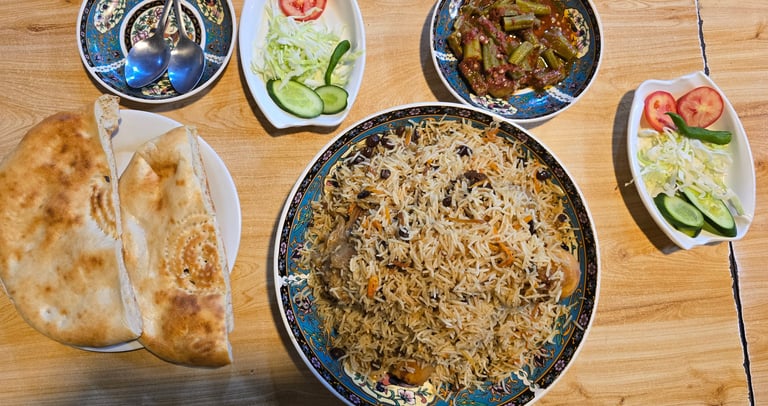
Families cook traditional Tajik meals for travelers: bread, rice, vegetables, meat, and a constant stream of tea. Breakfasts are bread, tea, eggs, and sometimes jam or cheese. Ask for Pamiri tea while you are at it. Called shirchay, it is black tea boiled with milk, butter, and salt, served alongside fresh baked bread. It sounds unusual and tastes like the mountains.
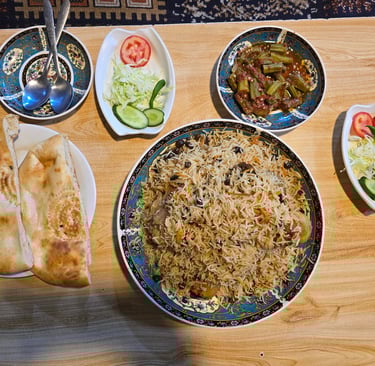
Lunches tend to be plov (rice cooked with meat and carrots), pasta, or bread with a vegetable and meat stew. Dinners follow a similar pattern. It is filling and authentic. Diverse it is not, but that is not the point.
Dietary restrictions
If you are vegetarian or vegan, flag it when you book. Homestays along the Pamir Highway can usually work around dietary needs, but options are limited. Strict vegans will find it harder. Traditional Pamiri cooking uses a lot of animal fat and there is no getting around that in most kitchens on the route. Bring your own backup food: trail mix, energy bars, dried fruit, nut butter. You will be glad you did.
Water
Boiled water and tea are available throughout the route. Some Pamir Highway travelers carry purification tablets as a backup, which is sensible given how remote some sections are.
Stomach issues
This is worth being direct about. A significant number of travelers deal with upset stomachs somewhere along the Pamir Highway. Hygiene standards vary, and cold chain management for meat is inconsistent. Power cuts are common, which means frozen meat does not always stay frozen. Pack anti-diarrhea medication, be cautious with meat at smaller stops, and do not ignore what your gut is telling you in the early stages.
11. Is the Pamir safe for travelers?
Short answer: Yes, for smart travelers. Road conditions are the biggest real risk, not crime or politics.
The Pamir Highway has a reputation that runs ahead of reality. People imagine political instability, bandits, and general lawlessness. The actual risks are more practical and more manageable than that.
Road safety
The road is rough and unforgiving, particularly for inexperienced drivers or motorbike riders in bad weather. Most accidents on the Pamir Highway happen to solo riders pushing too fast or underestimating conditions. If you are on a guided expedition, a professional driver handles the vehicle and knows the road. If you are driving yourself, the rules are simple: go slow, do not drive after dark, and know your limits before you find them the hard way.
Political and security situation
Tajikistan and Kyrgyzstan have had periodic border tensions, but the Pamir Highway route itself remains safe for travelers. There is a consistent government and military presence along the highway, including regular checkpoints. In practice, this adds a layer of security rather than concern. Local disputes do not spill into the tourist corridor.
Altitude sickness
This is the health risk most worth taking seriously. Ascending to above 4,600 meters without proper acclimatization will catch up with you. Symptoms include headaches, nausea, and shortness of breath. Hydrate, ascend gradually, and if you know you are prone to altitude sickness, talk to a doctor about Diamox before you go. If symptoms become severe, descend immediately. Do not wait it out at altitude.
Wildlife
Snow leopards and wolves exist in the Pamir. They avoid humans. Marmots are everywhere and entirely harmless. No snake encounters have been reported among travelers on the highway.
Corruption
Petty crime is genuinely rare in Tajikistan. What travelers do encounter occasionally is officials, at airports, checkpoints, or border crossings, fishing for a bribe. Do not pay. Stay calm, be polite, and hold your ground. It usually goes nowhere fast.
Female solo travelers
Women travel the Pamir Highway solo regularly and come back with positive reports. Dress modestly, cover shoulders and knees, accept tea and hospitality when offered, and treat the cultural context with respect. Many female travelers say they felt safer on the Pamir than in popular tourist cities elsewhere in the world.
12. Can I visit the Afghan market without a visa?
Short answer: Yes. No visa needed, no passport stamp.
There are several Afghan markets accessible from the Tajik side of the Pamir. The two most visited are worth knowing about before you plan your route.
Ishkashim Afghan Market
Open Saturday mornings only. The market sits in a strip of no-man's-land on an island between the Afghan and Tajik borders in the town of Ishkashim. You walk in without crossing any official border. Afghan traders bring rugs, spices, lapis lazuli, and handicrafts. No Afghan visa is required and your passport does not get stamped. Most travelers describe it as one of the more unexpected and memorable stops on the entire Pamir expedition.
Khorog Afghan Market
Also open Saturday mornings, near Khorog. The setup is similar in spirit but the market sits entirely on the Tajik side, making it even more straightforward to access. It is smaller and less busy than Ishkashim, but worth a stop if you are passing through.
A few things worth knowing
Bring your passport. It may be checked at the entrance.
Bargaining is part of the process, but keep it respectful.
Photography is generally welcomed, but ask before pointing a camera at anyone. Most people are happy to oblige.
These are not tourist markets dressed up for visitors. They are working cross-border bazaars where Pamiris from both sides trade goods. Treat them that way.
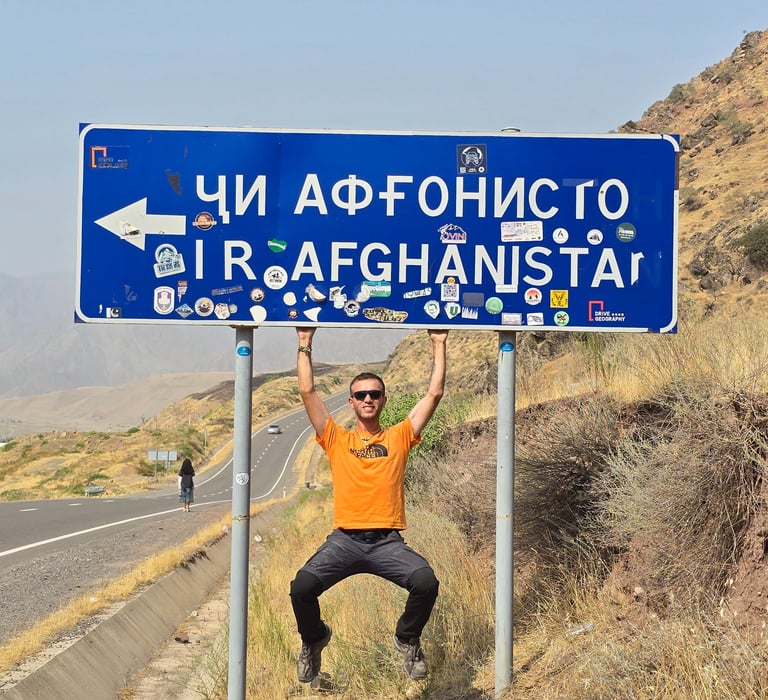
Yes, that's me at the border of Afghanistan (Wakhan Valley)
13. How fit do I need to be for the Pamir?
Short answer: Depends on your itinerary. Driving only: not very. Trekking focused: quite fit.
Fitness matters on the Pamir, but probably not in the way you are picturing. The bigger variable is how your body handles altitude, and that has almost nothing to do with how much you train at home.
Driving only
If your Pamir expedition is vehicle-based with short walks and no serious trekking, moderate fitness is all you need. Anyone without significant mobility issues can handle a driving-focused itinerary on the Pamir Highway. The road does the hard work.
Mixed driving and light trekking
Most Pamir Highway expeditions involve some walking at altitude each day, nothing technical, just paths and dirt roads between stops. Altitude will slow your pace regardless of how fit you are. Take it slow, rest when your body asks for it, and you will be fine. This is the most common experience level among first-time Pamir travelers.
Full trekking and summit expeditions
Some specialized Pamir itineraries involve multi-day trekking with camping or summit attempts on peaks like Lenin Peak. These demand real hiking fitness, genuine altitude adaptation, and honest self-assessment before you commit to them.
Altitude matters more than fitness
This is the part people underestimate. Highly fit people struggle on the Pamir while others with no particular training adapt without issue. Altitude sickness is not a fitness problem, it is a physiology problem. Give yourself two to three days to acclimatize before pushing hard, regardless of what shape you are in.
Older travelers
People in their 60s and 70s travel the Pamir Highway regularly and do it well. The key is choosing the right itinerary, driving-focused with minimal trekking, and not letting anyone else set your pace. The Pamir does not care how old you are. It does care whether you respect it.
14. What's the road actually like on the Pamir Highway?
Short answer: Rough, remote, occasionally spectacular, and sometimes deeply frustrating. Plan for average speeds of 30 to 60 km/h.
Nobody describes the Pamir Highway as a smooth drive. The road tests your patience, your vehicle, and your lower back in roughly equal measure. What it gives back is worth it, but go in knowing what you are dealing with.
Dushanbe to Khorog: the M41
The first 200 kilometers out of Dushanbe toward Kalaikhum are mostly paved asphalt, with sections of ongoing roadwork. Past Kalaikhum heading toward Khorog, the road shifts to gravel, potholes, and dirt, with regular rockfall to keep things interesting. Dushanbe to Khorog without stops runs 12 to 14 hours if you stay on the main highway.
Khorog to Murghab: the high plateau
From Khorog onward into the Pamir plateau, the road is gravel and dirt with large potholes throughout. Speeds drop, the altitude climbs, and the landscape opens up into something that justifies every rough kilometer behind you.
Wakhan Valley detour
The Wakhan Corridor detour is one of the more popular scenic diversions off the main highway. The terrain is more demanding, some sections are narrow with significant drop-offs, and a capable vehicle is not optional here. The views are extraordinary. Patience is the other requirement.
Bartang-Karakul detour
This route between Bartang and Karakul is worth taking when it is open. In May and early autumn, snowmelt and landslides can close it entirely. When conditions are right, it is slow going and completely worth it.
Breakdowns and mechanical support
Do not count on finding help quickly if something goes wrong. Small towns along the Pamir Highway have basic mechanics, but anything serious means waiting for a part or getting to Dushanbe or Osh. Carry a spare tire, basic tools, duct tape, and emergency supplies as a baseline. Traveling in convoy with at least one other vehicle is genuinely smart, not just a precaution for the overly cautious.
15. How do I plan my Pamir route?
Short answer: The classic route takes 7 to 10 days. Add detours and you are looking at 12 to 14 days. Your time, fitness, and what draws you to the Pamir in the first place should drive the decision.
The Pamir Highway is not a single fixed itinerary. It is a framework you build around your schedule and what you actually want from the expedition.
The classic route: Dushanbe to Osh (or reverse)
This is what most first-time Pamir travelers run. Dushanbe south to Khorog, then onward to Murghab on the high plateau, then down into Osh in Kyrgyzstan. The reverse works equally well. Either direction gives you the full spine of the highway in 7 to 8 days of driving with stops. This is the baseline everything else gets added to.
Detours worth considering
Wakhan Corridor: adds 1 to 3 days depending on how deep you go. One of the most remote stretches of the entire expedition, with landscapes that do not look like anything else on the route. Not everyone takes it. The ones who do rarely wish they had skipped it.
Bartang-Karakul: adds 1 to 3 days depending on whether you run the full road or just the entrance section. Scenic, slow, and seasonally unreliable due to landslides. Check conditions before committing.
Shokhdara Valley: quieter and less visited than the main highway. A good choice if cultural immersion matters more to you than covering ground.
Flying Dushanbe to Khorog cuts 1 to 2 days of driving and gets you straight into the high-altitude section. A legitimate option if your time on the Pamir is tight.
Practical planning
If this is your first Pamir expedition, book with a guide or operator. Driving independently raises the difficulty level considerably and the margin for error is thinner than it looks on a map.
If you are going solo or self-driving, connect with other travelers before you leave through WhatsApp groups or Facebook communities built around Pamir Highway travel. Sharing vehicles splits costs and means you are not alone if something goes wrong on a remote section.
Download offline maps via Maps.me for both Tajikistan and Kyrgyzstan before you cross any border.
And remember that season dictates what is actually open. Routes like Bartang are only reliable between June and September. Plan your timing around the road, not the other way around.


Final Thoughts on Your Pamir Highway Adventure
The Pamir Highway is not easy. The roads are rough, the altitude is real, and comfort is in short supply for most of the route. None of that is a reason to hesitate. It is a reason to prepare.
If you have questions that this guide did not cover, get in touch with us directly. We have been on these roads and we are happy to talk through whatever you are trying to figure out.
Go. The Pamir is waiting and it does not wait forever.
This FAQ was fully updated in March 2026, based on real traveler feedback from our expedition community.
Beyond Boundaries.
© 2026. All rights reserved.
About us:
Who are we
Contact
Practical information:
Refund policy
Privacy Policy
Terms and Conditions
Legal Notice